Independent Portfolio Analysis
Customer Value Segmentation for Retention & Personalized Marketing
Customer Analytics
Customer purchasing behavior was analyzed to identify distinct groups based on how frequently customers bought and how much they spent, then translate those groups into practical retention and marketing strategies.
The Business Question
Not every customer should receive the same marketing treatment. The project asked: “Can customer transaction data reveal meaningful groups that should be marketed to differently?”
What I Analyzed
The source data contained approximately one million retail transactions, including transactions, customers, transaction value, products purchased, number of items, discounts, promotions, season, and location. Transaction-level data was transformed into customer-level purchasing profiles. Customers were compared primarily by purchase frequency—how often they bought—and customer value—how much they spent overall.
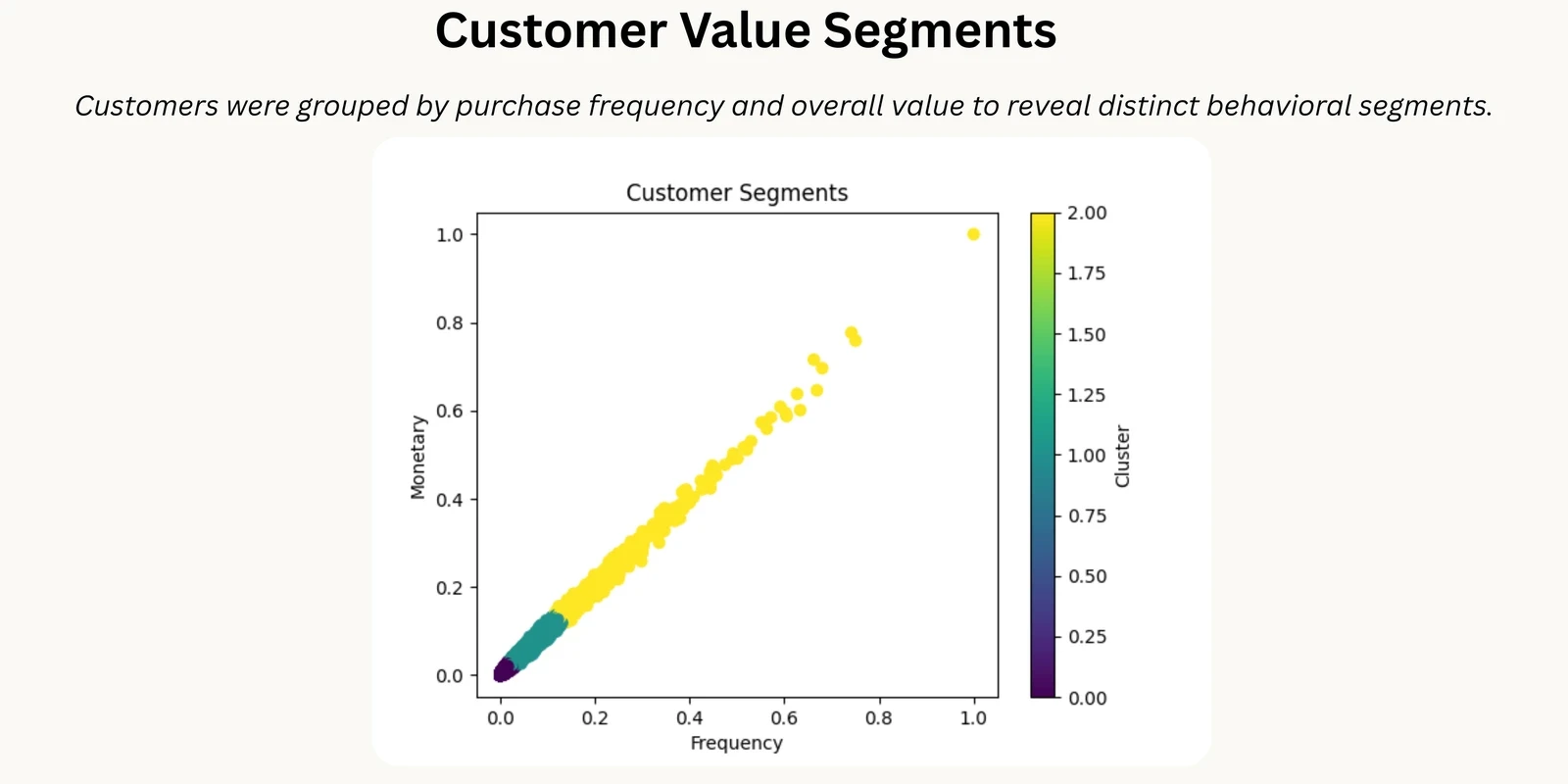
Customer Value Segments

Segment Selection Analysis
Key Findings
Three broad customer groups emerged. Occasional Shoppers purchased relatively infrequently and generated lower overall spending: potential opportunities include re-engagement, second-purchase incentives, and understanding barriers to more frequent purchasing. Regular Customers showed moderate purchasing frequency and spending: recommendations, loyalty incentives, cross-selling, and more relevant communication are potential ways to increase value. High-Value Customers purchased frequently and generated higher spending: retention, recognition, personalized experiences, and maintaining the relationship are potential priorities rather than relying heavily on discounts.
What This Means for the Business
Occasional Customers: test reactivation campaigns designed to encourage another transaction. Regular Customers: explore purchase frequency, basket value, category adoption, and loyalty. High-Value Customers: prioritize retention, personalized experiences, loyalty recognition, and monitoring for declining engagement. Customer value should influence how marketing resources are allocated.
Recommended Actions
Create differentiated CRM journeys for each segment. Prioritize retention efforts toward valuable customers. Test targeted offers instead of blanket promotions. Create strategies to move regular customers toward higher-value behavior. Monitor movement between customer groups over time. Combine segmentation with product, campaign, or channel data for deeper personalization. These are proposed strategies to test, not claims of implemented results.
Methodology & Tools
Python · pandas · scikit-learn · matplotlib
Customer-level purchasing features were created from transaction data, normalized for comparison, and grouped using K-Means clustering.
Project Context & Transparency
The original project explored RFM-style segmentation. Because the dataset did not contain a usable last-purchase date, true Recency could not be calculated. This case study therefore presents the analysis accurately as purchasing-frequency and customer-value segmentation rather than full RFM analysis.
Independent portfolio analysis using a public retail transaction dataset. This project was not paid client work.
Facing a Similar Challenge?
Let’s discuss your business, the data you already have, and the decisions you’re trying to make.